

How to improve memory skills?

The effect of ginseng on the nervous system
The psychostimulating effect of ginseng is to activate the functions of the brain.
Studies have found that Korean ginseng extract:
- improves memory;
- promotes cognitive development (learning);
- promotes adaptation in stressful situations and after them;
- restores brain neurons;
- slows down neurodegeneration;
- activates the secretion of neurotransmitters.
Scientists from Bulgaria and Korea have found that Korean red ginseng increases brain activity and maintains psychological balance. Ginseng is able to regulate the processes of excitation and inhibition.
Studies have shown that different groups of ginseng saponins affect the activity of the central nervous system in different ways. Thus, ginsenosides of the protopanaxadiol group inhibit it, while ginsenosides of the protapanaxatriol group, on the contrary, stimulate it.
Ginseng affects the metabolic processes of neural networks, the process of transporting amino acids through the blood-brain barrier, as well as the metabolism of monoamines in the brain.
Triterpene glycosides effectively protect and restore brain neurons after drinking toxic doses of alcohol.
A growing number of publications also testify to the effectiveness of ginseng in the treatment of diseases of the central nervous system. Scientists are investigating the effects of ginseng on the body not only in well-known pathologies such as prolonged stress or ischemia, but also in relatively recently studied neurological and psychiatric disorders, including Alzheimer’s disease and Attention deficit hyperactivity disorder (ADHD).
The protective effects of ginsenosides Rb1, Rg1, Rg3, and Rh2, which slow down neurodegeneration, are well studied. In an experiment performed on rats, ginsenoside Rb1 was found to partially prevent memory impairment caused by the cholinergic agent scopolamine. Ginsenosides regulate various types of ion channels, for example, voltage-gated and ligand-gated channels in nerve cells. Ginsenosides inhibit (suppress) the activity of voltage-gated Ca2+, K+, and Na+ channels, some ligand-gated ion channels.
Animal studies have shown that ginsenosides promote the development of spatial thinking. Ginsenosides reduce the likelihood of a heart attack and increase the number of neurons, as well as effectively reduce the amount of tau proteins. It is believed that the formation of tau proteins is one of the main causes of the development of Alzheimer’s disease. Tau protein is a protein that is inside the neuron, which disrupts the activity of the latter, destroying its structure, which ultimately leads to the destruction of the neuron itself.
In addition, ginsenosides activate the secretion of neurotransmitters, increasing phosphorylation in synapses. Competition and site-directed mutagenesis experiments have shown that ginsenosides interact with the ligand-binding sites of ion channels or in the pore region of the channel and inhibit ion channels in the open state. Recent studies have shown that long-term use of ginseng can prevent memory loss or deterioration. This means that ginseng protects the brain from stroke and may contribute to the normalization of cognitive function in Alzheimer’s disease.
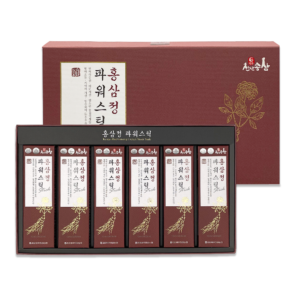
Sticks with extract of 6-year-old red Korean ginseng
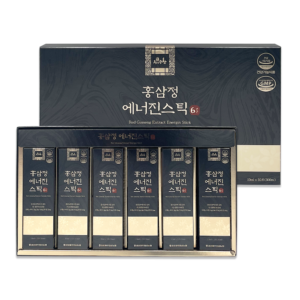
Sticks with extract of 6-year-old red Korean ginseng.
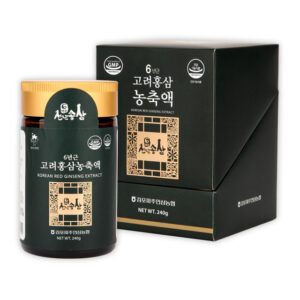
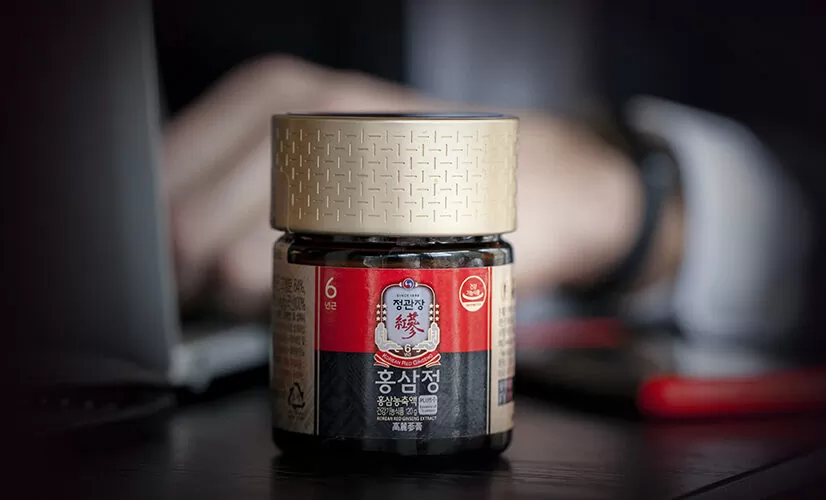
Concentrated 100% extract of 6-year-old red Korean ginseng root.
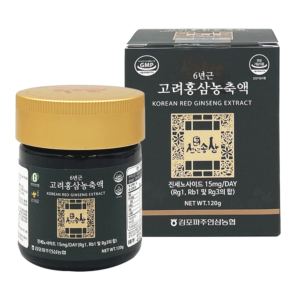
Concentrated 100% extract of 6-year-old red Korean ginseng root.
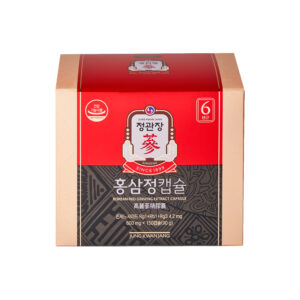
The capsules contain not only red Korean ginseng, but also grape seed oil, wheat germ oil and vitamin E.